
What does the new LLM ‘watermark’ mean for marketing teams?
Source: Unsplash
Human-centred content is the way to go - as long as you can prove it.
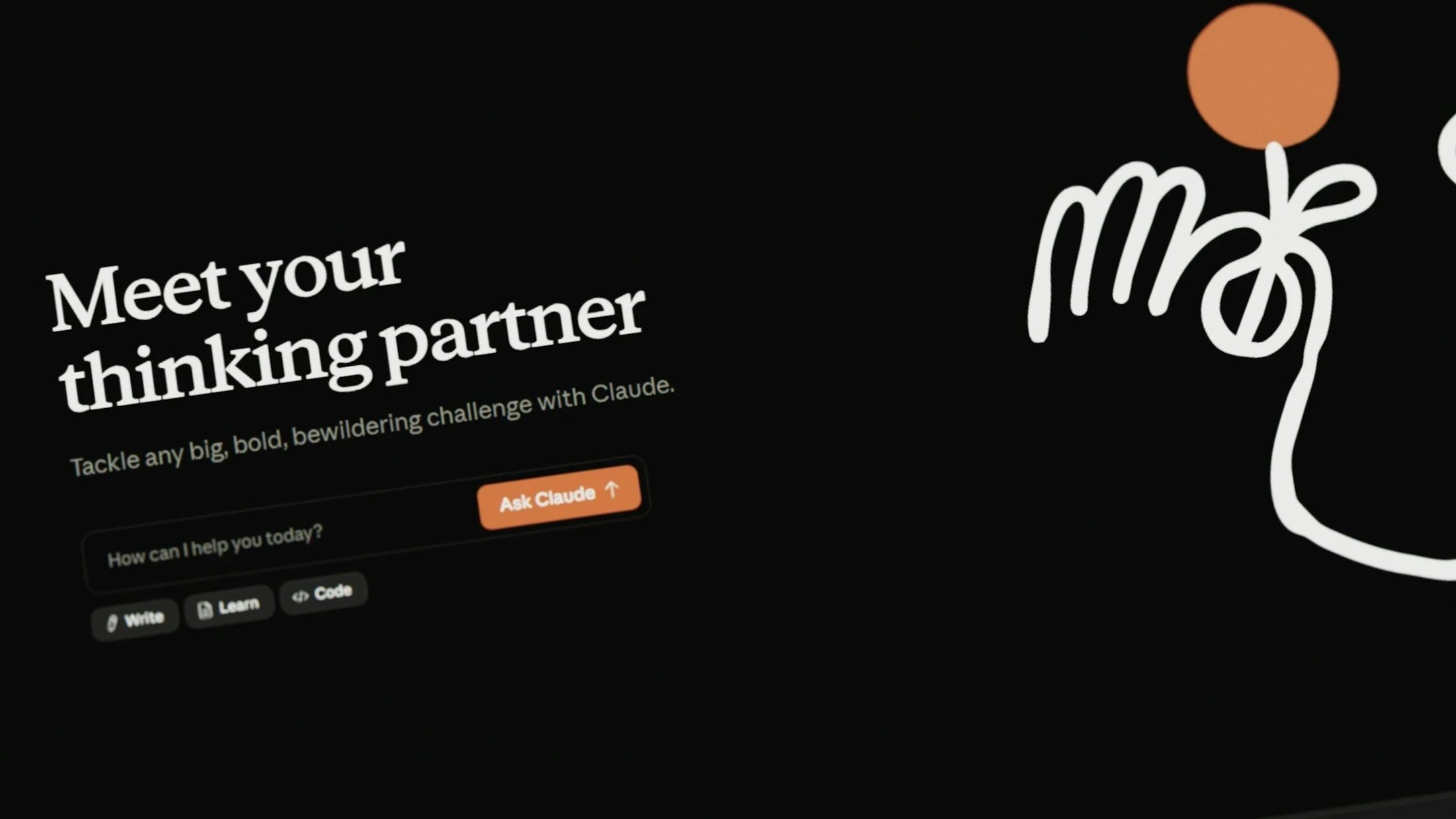
For a large language model (LLM) that loves slipping in the word “quietly” at every opportunity, the timing from Claude was perhaps to be expected. Introducing a new watermark across its models, and announcing it in mid-August while most people are on holiday, is likely to cause a hot fuss when people start digesting the implications.
Take a look if you want to know what our AI policy is.
Here’s what Claude is doing:
New models will mark AI-generated content from day one. Claude models launched in the EU on or after August 2, 2026 will support machine-readable marking at launch. Generated text will carry embedded watermarks, and generated files will include digitally signed provenance metadata where supported.
Marking works everywhere you use Claude. Marks will apply to output from supported Claude models across Claude Platform (API), Claude, Claude Code, Claude Cowork, and Claude Tag, and wherever Claude is offered, worldwide. Some platforms or features may not support certain marking types.
We'll help you detect Claude's marks. We'll support users and other third parties to detect Claude’s marks, as the Code requires, and we’ll share details in forthcoming documentation.
Existing models are in progress. The law includes a transition period for Anthropic models launched before August 2, 2026, and we’re working to add marking support for those models as well.
Thanks EU (no really, thanks)
So why now? Well, as the Claude support page shows, this is in direct response to the European Union’s AI Act’s Article 50, which was brought into force on 2 August. Anthropic has clearly taken the view that where the EU leads, other regions and regulators will follow.
What does the new AI regulation ask of content creators?
The transparency obligations apply to companies that publish publicly available content “in the public interest”. There’s a good chance (in my non-lawyerly opinion) this may be applied to annual reports, investment and market commentaries, even thought leadership.
Here’s the good bit:
"Deployers of an AI system that generates or manipulates text which is published with the purpose of informing the public on matters of public interest shall disclose that the text has been artificially generated or manipulated. This obligation shall not apply... where the AI-generated content has undergone a process of human review or editorial control and where a natural or legal person holds editorial responsibility for the publication of the content."
What does this mean for firms that publish content?
They will need to be able to answer one simple question: Is a human genuinely responsible for creating this? If the answer is no, it needs to be disclosed with an AI label.
If the answer is yes, the label is not required.
And what does this mean for the marketing teams creating it?
Let’s start with investment firms, particularly those with a European footprint. This is good news for those with a dedicated human writing resource.
Not so good for those who have been using AI to create investment outlooks, market commentaries and thought leadership.
Taken together, there’s a bit of a minefield for companies that avoid using the AI-generated label, but may at some point fall foul of an AI watermark.
But wait! There’s more…
At the same time, Anthropic is admitting that the watermarking will have “limitations”. Here’s what they say:
A detected mark provides a signal that content was processed by Claude, but is not fully conclusive. Detecting a Claude mark tells you that the content may have been processed by Claude. It does not, on its own, confirm the full provenance of the content. For example:
Claude may not be the original author. People often use Claude to proofread, translate, summarize, or convert files. The output can carry a Claude mark even if the underlying ideas, text, or data originated from another source;
The content may have changed after Claude processed it. Marked content may be modified, excerpted, or combined with other material after Claude processed it.
Lack of a detected mark doesn’t mean the content wasn’t AI-generated or processed. Content generated by Claude may not carry a detectable mark if, for example:
It was generated by a model released before marking was supported;
The text has been heavily edited, paraphrased, translated, or mixed into other writing;
The passage is very short, leaving too little text for a reliable signal;
A file’s metadata was stripped through format conversion, re-saving, screenshots, or other means;
It was produced through a platform, feature, or file type where a particular marking type wasn’t supported.
In other words, your content may or may not get watermarked. And those watermarks may, or may not, demonstrate what the EU regulations have designed the AI Act to protect consumers against. And the likelihood of false positives and negatives on any published content is now incredibly high.
That’s that cleared up! As Cory Doctorow puts it, ”AI is the asbestos we’re shovelling into the walls of our high-tech society”, and it’s going to be a challenge to find it, never mind start digging it out.
So, why not just carry the AI label, right? Who cares anyway?
That’s one approach, yes. But how convinced are you that your clients won’t think less of you? Would you stake your reputation on it?
Because there’s some highly credible research highlighting the “transparency dilemma”around AI, as disclosing AI usage on a company’s content is found to erode trust too.
Marketing teams have a dilemma to face
Either way you slice it, if you can’t say a human was responsible, and you can’t offer a strong defence against an accusation of using AI to create it, then you risk seriously damaging your brand (with a fine to boot). Lose-lose.
These laws aren’t going away any time soon. But there’s one easy way to solve this – get a dedicated investment writing resource in to help support your marketing team. And make sure that resource has well-documented evidence from start to finish of how their content was produced.
It may not prevent false positives, but it will give you a robust defence if you are ever asked to raise one.
Because if you’re operating in an industry where trust is your biggest selling point, but you can’t definitively say who was responsible for your content without your audience feeling disappointed in you, you’ve got a bit of a problem.
